
Foam in a pool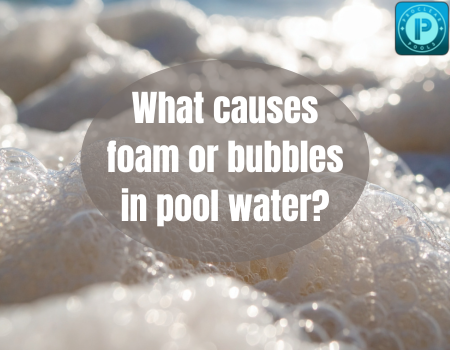 isn’t dangerous in most cases but it isn’t normal and it doesn’t resolve without addressing whatever produced it. The instinct to shock the pool when foam appears is understandable and usually doesn’t work because chlorine isn’t what foam is about. Foam is a surface tension problem. Surface tension problems come from specific contaminants that change how water behaves, not from inadequate sanitizer.
What changed before the foam appeared is almost always the answer.
Contaminants
Sunscreen is the cause nobody thinks of first and the one responsible for most pool foam in heavily used pools. Sunscreen, body lotion, hair products, and the oils that come off the skin naturally — all of these introduce surfactant compounds into the water. Surfactants are exactly what makes soap lather. Water with surfactants in it holds air at the surface instead of releasing it, that’s the foam, because clean water doesn’t do this. A pool that had six people in it on a Saturday, wearing sunscreen and swimming for four hours, has enough surfactant material introduced to produce foam that shows up on Sunday morning when the pump starts. The bather load is the cause, and the foam is what it looks like the next day.
Algaecide is the chemical cause that produces the most confusion because people add it to solve a problem and the foam that follows looks like a new one. Certain algaecide formulations, specifically the cheaper quaternary ammonium-based products, are surfactants themselves. Adding a surfactant to a pool to kill algae and then wondering why the pool is foaming is a direct cause and effect that the product label often doesn’t make obvious. Copper-based and polyquat algaecides don’t foam the way quat-based ones do. The price difference is worth it for this reason alone.
Detergent contamination is less common but produces more dramatic foam when it happens. A swimsuit washed in laundry detergent and not rinsed thoroughly carries enough residual surfactant to foam a pool noticeably. A brush or vacuum head washed with soap and put back in the water before fully rinsing does the same. The foam that appears after a cleaning session sometimes has nothing to do with the water and everything to do with the equipment that went into it.
Chemical Imbalance Can Lead to Pool Foam
Low calcium hardness is the water chemistry condition most consistently associated with foaming that has no obvious contamination source. Soft water, water with calcium hardness below roughly 150 ppm, foams more readily than water with adequate mineral content because the dissolved minerals that give water its structure and surface tension aren’t there. In Arizona this is rarely the culprit because the fill water is hard enough that calcium hardness is almost always above the minimum. After significant dilution from an unusually wet monsoon season or after a partial drain and refill with softer water it becomes more relevant.
Total dissolved solids accumulate over time as chemicals go in, evaporation concentrates what’s already there, and organic material breaks down into the water. High TDS levels change how the water behaves physically in ways that compound with other issues. A pool that’s been topped off repeatedly through a full Arizona summer, without any drain and refill, has concentrated everything in the water to the point where its physical properties are different from fresh water. Partial drain and refill addresses this when TDS reaches levels affecting water behavior, which in Arizona summer happens faster than in moderate climates because of the evaporation rate.
Filtration
A foam problem in a pool with a filter running past peak performance – two problems rather than one. Filtration doesn’t pull dissolved surfactants out of the water the way it captures particulate matter, but it does remove the organic material that contributes to the chemical environment where foam develops. A clean filter running adequate hours is the baseline everything else depends on.
Enzyme treatments are specifically designed for the organic contamination that causes foaming. They break down oils, lotions, and the organic compounds that filtration can’t remove and that chlorine only partially oxidizes. Regular enzyme addition during heavy use periods reduces the surfactant accumulation that chlorine dosing and filter maintenance don’t address. It’s the category of product that targets the source of the foam rather than the foam itself, which is the only intervention that actually changes the pattern rather than temporarily improving it.
The CDC’s healthy swimming resources cover how pool water chemistry affects water quality, what contaminants bathers introduce into pool water, and how chemical balance interacts with sanitizer effectiveness; useful context for pool owners trying to understand why foam appears and what the water conditions behind it mean.